
Why Africa Will Define the Next Decade of Digital Public Infrastructure
A reflection by three DG colleagues across country implementation, partnerships, AI, Data Governance and Strategic Communications
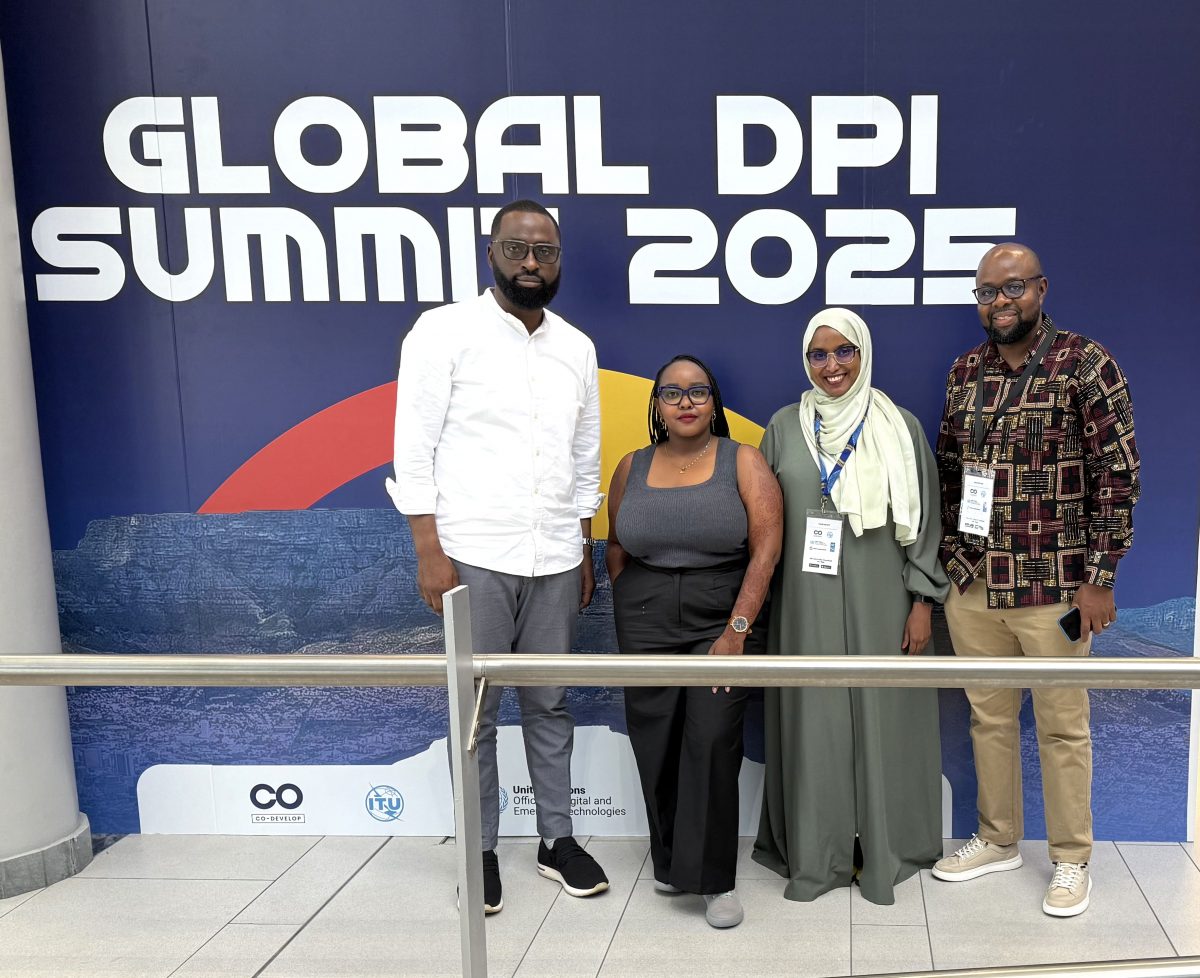
The conversation on Digital Public Infrastructure (DPI) is moving fast, and this was clear during the three-day Global DPI Summit in Capetown, South Africa, in November 2025. The vision was bold: a future where identity, payments, and data exchanges unlock development at scale. As highlighted by the CEO of Ekstep, Shankar Maruwada, during one of the side events on AI and DPI at the Summit, language is powerful, and shared vocabulary across stakeholders ensures alignment among technologists, policymakers, implementers, and funders. This is most visible with the DPI conversation, where language adoption has brought together various stakeholders at the global level, and the narrative is now shifting from high-level frameworks to one where countries are now looking at tools, governance models, and partnerships that support actual service delivery.
While the energy now feels different with this Summit, we also sensed a growing tension. DPI is gaining endorsement from governments, philanthropists, multilaterals, and private-sector actors, but remains deeply complex. As colleagues based in Africa and working across different countries, in digital transformation, data governance, AI, interoperability, partnerships, policy, and communication, this is the space where we have quietly been working for years. This piece reflects what resonated, what challenged us, and where we think the conversation must go next.
1. The Conversation Has Shifted: From Idealism to Implementation Reality
From the Summit, it was clear that there was a sense of urgency to move towards implementation and ensure that DPI works for countries and serves citizens. Panel discussions showcased country examples but also asked difficult questions: how do we finance and maintain DPI sustainability? How do we move fast and avoid vendor lock-in? How do we ensure interoperability?
The 50-in-5 Campaign is growing and is now in 32 countries. We saw concrete commitments such as the 10-year Public Private Partnership (PPP) model (Palestine) and production-grade systems replacing pilots. This symbolizes a collective appetite towards implementing DPI and making it work. The conversation on implementation also brought in the messier reality of implementing DPI, moving us away from concepts and rhetoric. Political transitions, capacity (not only technical but strategic), ethics, and culture shape what is possible. This on-the-ground reality is where African experiences matter, as it brings a valuable realism to the global conversation and highlights the trade-offs that must be clear.
2. Trust and Inclusion: The Backbone of DPI
If there is one theme that came up in every session, it was trust. It was highlighted as a core building block to ensure that digital systems survive political cycles and earn public buy-in. The trust conversation was framed through various lenses at the summit – procedural (focusing on safeguards and regulation), operational (systems that work), and relational (where citizens believe the services provided will benefit them). A panelist from Kenya gave an example that illustrates this point: his 18-year-old son completed 80% of passport processing online using the eCitizen (a portal for government information and services), only to repeat biometric steps that he had completed for his national ID. This raises the question: why isn’t data that has already been collected used to improve service delivery? This is both a technical question on interoperability, but also a question of institutional trust and people’s risk comfort.
In Africa, perspectives on trust are especially important. This Research ICT Africa project highlights that DPI in African countries cannot be copied from other regions and cannot be separated from issues such as uneven access. Trust building must begin with understanding these realities.
3. Interoperability is Non-Negotiable but is Still Poorly Understood
It was great to finally see interoperability discussed as a non-negotiable, not a nice-to-have. This helps with making DPI more valuable. We heard examples of this in practice, such as the Inter American Development Bank’s tech platform, which supports digital integration across Latin America and the Caribbean by allowing citizens to access digital services with a single account across multiple platforms and countries. Similarly, the Government of Indonesia shared insights from its Government Services Liaison System, which is designed with auto-scaling capabilities. This allows the system to automatically increase capacity during spikes in demand, such as during the rollout of large public programs. As the country’s Director of Digital Government Application, Yessi Arnaz Ferrari noted, “This is exactly what allows us to grow from 65 agencies to 435 connected institutions, handle over 58 million data transactions this year, and still maintain about 99.9% uptime.”
Despite this, we noticed that many DPI initiatives shared as examples in the summit focused on digital ID and payments, and they are seen as more fundable and politically attractive. Data exchange remains the missing middle and is challenging to achieve. An example from Burundi on a data exchange system deployment highlighted issues around language barriers: French as the main platform language and local languages lacking technical terms, access limitation with only 40% of the population having smartphones, and some local offices hesitant to participate in integration across registries. We know from DG’s experience helping governments repurpose legacy systems, share data assets, and build data exchange mechanisms fit for interoperability that this invisible area is both hard to achieve and will be essential for DPI going forward.
Where does the conversation go from here, and what must the Global community learn?
As the global DPI movement moves from ‘what’ to ‘how’ and enters an operational decade, African experiences will determine what this decade looks like. As Dr James Mwangi, CEO of Equity Bank, noted at the Summit, Africa’s current 2-3% GDP contribution, despite accounting for 18% population share, is not a deficit but evidence of massive untapped potential that private sector-led DPI can unlock. He argued that Africa’s underdevelopment makes it the world’s biggest growth opportunity and emphasized that African capital must be deployed by Africans for African infrastructure rather than relying on grants and philanthropy. Most critically, he reminded the audience that by 2050, Africa will hold 42% of the world’s labour force, 2.6 billion people with a mean age of 18, and that with the right DPI foundation, this workforce can serve global markets from Africa, flipping the prevailing narrative on migration and dependency.
In our internal reflections, one analogy that sparked discussion was viewing DPI as a public good – similar to roads. The comparison helped us to surface questions about who funds, builds, governs, and coordinates systems so they serve the public interest. While real-world arrangements are often far messier and differ depending on context, the analogy was useful in highlighting risks around fragmentation and misalignment when coordination is weak.
Against this backdrop, DPI will not succeed in Africa on advocacy and branding alone. The continent will test assumptions, reveal blind spots, and ensure that innovation is practical and works for the people it aims to serve.
Notably, civil society voices were largely missing from the conversation. While some Open Government Partnership colleagues were part of the discussions, there is a need for more civil society and a wider range of government actors in this space as well. The narrative on speed, with some voices missing, risks overshadowing institutional readiness and leaving DPI deepening digital inequalities in countries, working to the disadvantage of the marginalised communities it also seeks to benefit.
The campaign may be ahead of the evidence around economic value and socio-technical realities, but research projects such as this by Research ICT Africa will ensure that DPI in Africa is grounded in real political economies and institutional incentives and works for the people it serves. This moves the conversation to the next stage, stepping away from “how do countries adopt existing DPI models” to “what does DPI need to succeed in African countries”? Communities of Practice and Informal Networks, such as ImNet hosted by Open Cities Lab, bringing together African DPI implementers, will ensure a coordinated approach amongst DPI implementers in support of inclusive economic opportunity, digital sovereignty, and improved public service delivery.
The global community has started to listen, and the continent’s realities on access, linguistic diversity, informal economies, and affordability challenges will bring clarity that global frameworks often overlook. On that front, Africa will define DPI on its own terms and show the world the way forward.