
From Ambition to Adoption: Reflections on AI in Higher Education in Kenya and Jordan
Higher Education Institutions (HEIs) are increasingly expected to move beyond experimenting with new generative and agentic AI tools. They are being asked to shape the future workforce, strengthen research and innovation, and build the governance systems that make AI adoption effective, responsible, and sustainable. However, as IREX and DG’s recent report, From Ambition to Adoption: Insights into University AI Readiness from Around the World, notes, HEIs’ efforts to turn AI adoption into institutional value lag behind leadership ambition.
Recognizing the need to address this gap, the Office of the Special Envoy for Technology of the Republic of Kenya, IREX, and Development Gateway: An IREX Venture (DG) convened a strategic dialogue in Nairobi on June 3, 2026, during the Global Data Festival. The event provided an opportunity to explore ways of closing the gap between AI ambition and institutional adoption in the higher education sector.
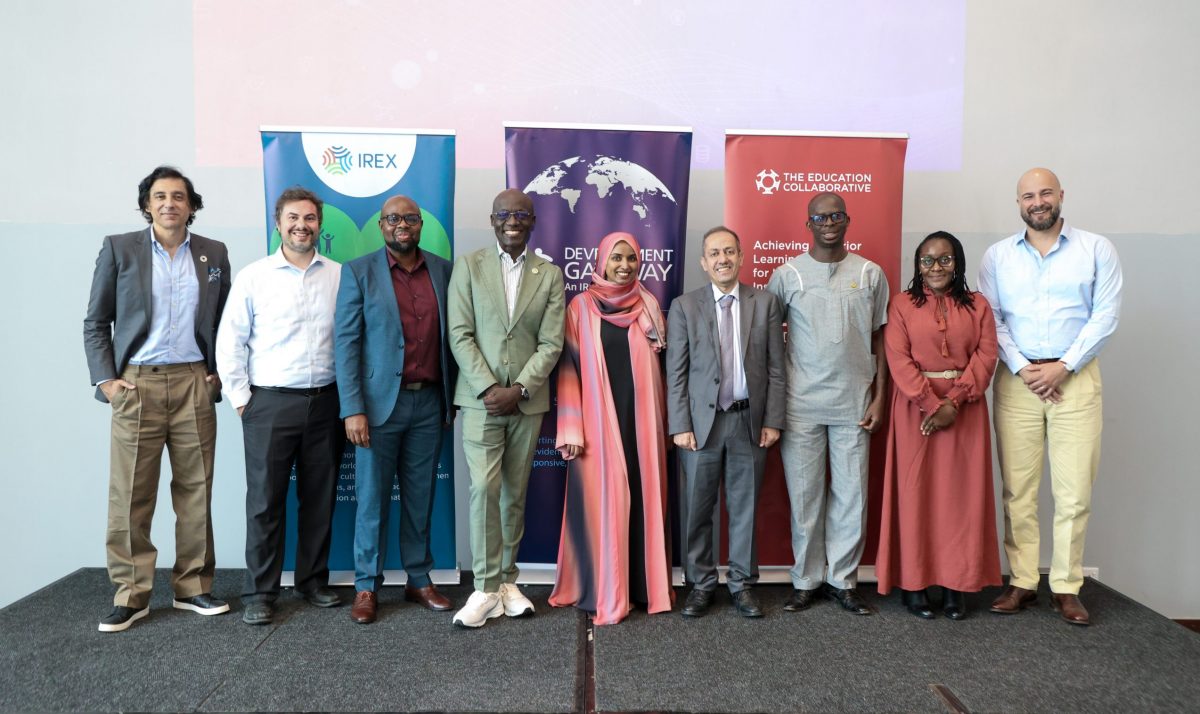
The dialogue brought together a multi-stakeholder group of development funders, political and diplomatic representatives – including the Ministry of Education and the Embassy of the Hashemite Kingdom of Jordan in Kenya – Kenyan universities and other HEIs, as well as private-sector representatives.
The dialogue was rich and varied, with contributions broadly falling into three categories: AI sovereignty, meaningful partnerships, and priorities for adoption.
1. AI Sovereignty
Throughout the dialogue, participants repeatedly returned to the question of who controls data, knowledge, infrastructure, and the terms under which AI tools are built, input data is generated, and outputs are used in higher education contexts. This was not framed as an abstract policy concern but treated as a practical issue that impacts the security of student data, university and researcher intellectual property, and the use of AI tools produced outside of Kenyan or Jordanian contexts.
Participants shared several examples of what AI sovereignty looks like in a practical higher education setting. Representatives from the Jomo Kenyatta University of Agriculture and Technology (JKUAT) highlighted their recent successful effort to establish an AI Center of Excellence at the university, designed to build Kenyan and regional capacity through a shared institutional, governance, and data ecosystem. Representatives from the Kenya Technical University described a local-language chatbot project they are building, which is hosted on local servers and utilizes locally based computing power, signaling an effort to keep data and compute closer to the communities that AI serves.
On the Jordanian side, Professor Ziad Hawamdeh, the University of Jordan’s Vice President for Administrative Affairs, Financial Affairs, and Digital Transformation, emphasized the importance of HEI leadership setting the boundaries and parameters for AI use within university contexts and highlighted cybersecurity as a critical component of sovereignty.

2. Partnerships That Matter
The dialogue also made clear that no university can achieve this transition alone. In a resource-constrained environment, partnerships are not optional extras; they are enabling conditions for transformation. The experience of the United States International University-Africa (USIU-Africa) offered a vivid illustration: its digital shift during the COVID-19 pandemic depended heavily on a long-term partnership with the Mastercard Foundation, which supported infrastructure, instructional design, and a wholesale redesign of online delivery.
That example also pointed to a broader lesson about the nature of good partnerships. The most useful collaborations were described as equal, context-aware, and problem-driven rather than extractive or transactional. Participants stressed the value of partnerships across universities, government, development partners, industry, and edtech firms, but insisted that these relationships must respect institutional priorities and local realities. In that sense, the Kenya-Jordan exchange itself reinforces this message: cross-regional learning can accelerate progress when it is built on mutual respect and shared problem-solving.
3. Priorities for Adoption
A third theme focused on priorities. The discussion quickly moved beyond enthusiasm for tools and toward the institutional foundations needed for AI adoption to be meaningful. Those foundations include AI policies, faculty development, assessment redesign, digital infrastructure, and mechanisms for measuring AI’s impact on learning and research.
Universities in the room shared practical examples. USIU-Africa has shifted toward more applied assessments, placing a stronger emphasis on projects, videos, and other practical work rather than traditional exams alone. Strathmore University highlighted challenge-based learning tied to real industry problems, helping students use AI without losing the habit of critical thinking. Professor Hawamdeh described the broader transformation of classrooms, content, and operations as part of a move toward smarter governance and a more digitally capable institution. The common thread was clear: higher education institutions should use AI to strengthen core learning outcomes, not replace them.
Moving from ambition to adoption: Setting the Foundations for Sustainable Transformation
The dialogue closed with the broad contours of a practical approach toward moving from ambition to adoption of AI in the HEI sector in Jordan and Kenya.
First, universities should conduct AI readiness assessments to understand where they stand on governance, infrastructure, skills, and culture before scaling adoption.
Second, partners should support sandbox and testbed environments where institutions can test AI tools against real academic and administrative needs.
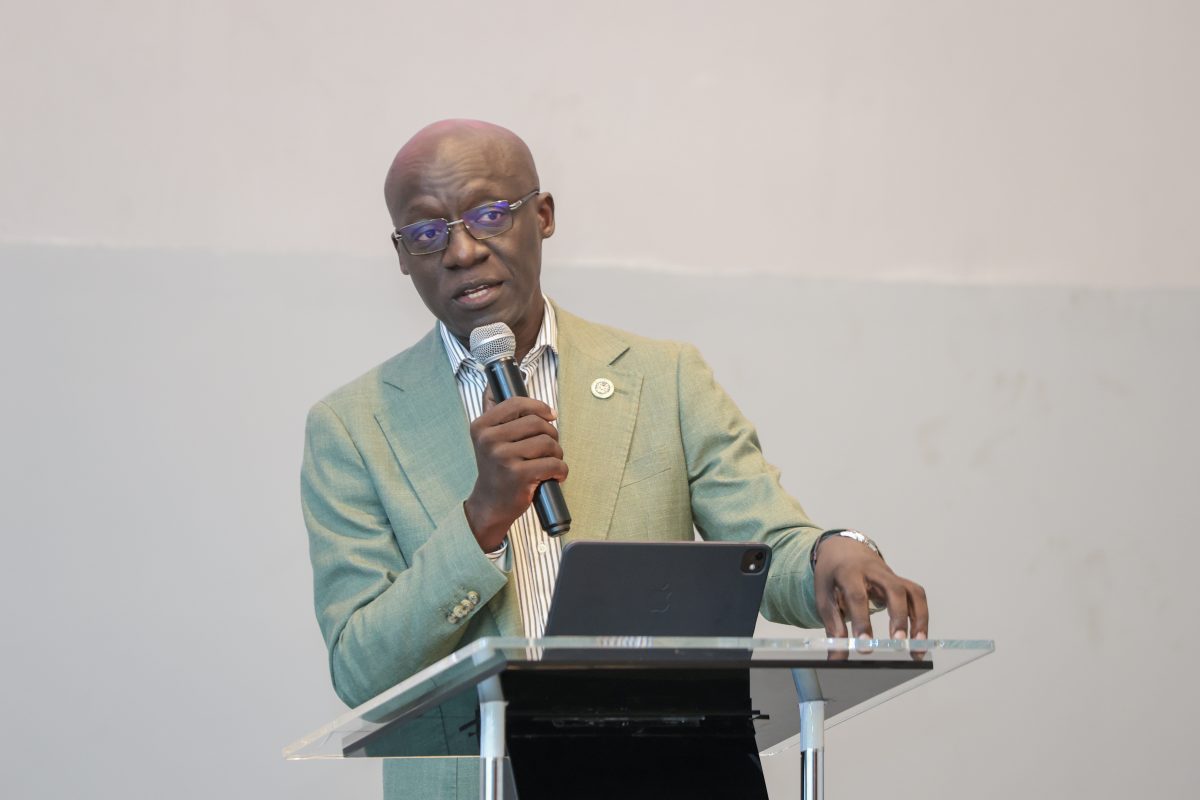
Third, as Ambassador Philip Thigo, the Special Envoy for Technology, emphasized, “We need standards” to implement locally owned, sovereign solutions within the HEI sector.
Finally, universities and their partners should build a stronger investment case for AI in higher education, one that speaks not only to ministries of education but also to ministries of finance, donors, and other decision-makers.
Therefore, moving forward, the opportunity is to turn scattered experimentation into coherent, sovereign, and sustainable adoption pathways that serve learners and societies alike.