
Advancing Tobacco Control in Zambia: The TCDI Website
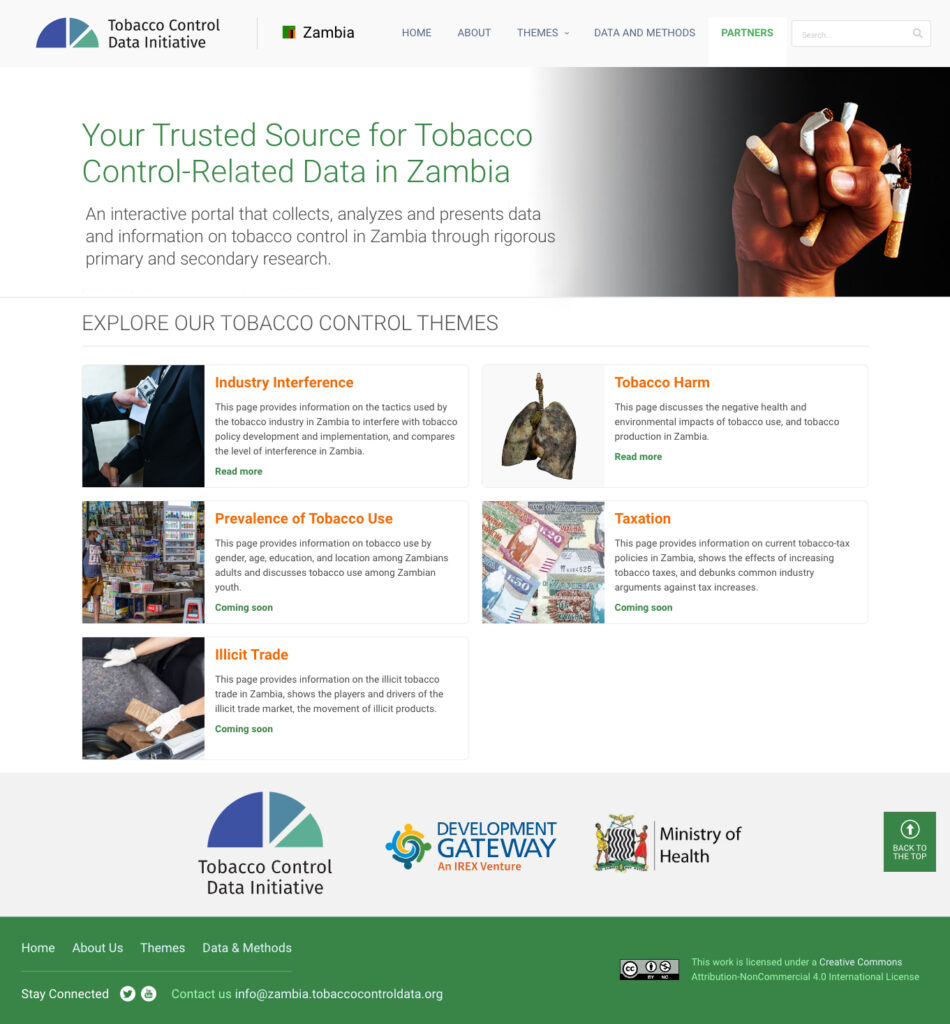
In response to the impending threat of tobacco use in Zambia and the various dangers that accompany it, the Tobacco Control Data Initiative website creates a “one-stop shop” to access the relevant data that Zambia’s policymakers need to advance tobacco control legislation.
Advancing Tobacco Control in the Democratic Republic of the Congo: The Tobacco Control Data Initiative (TCDI) Website
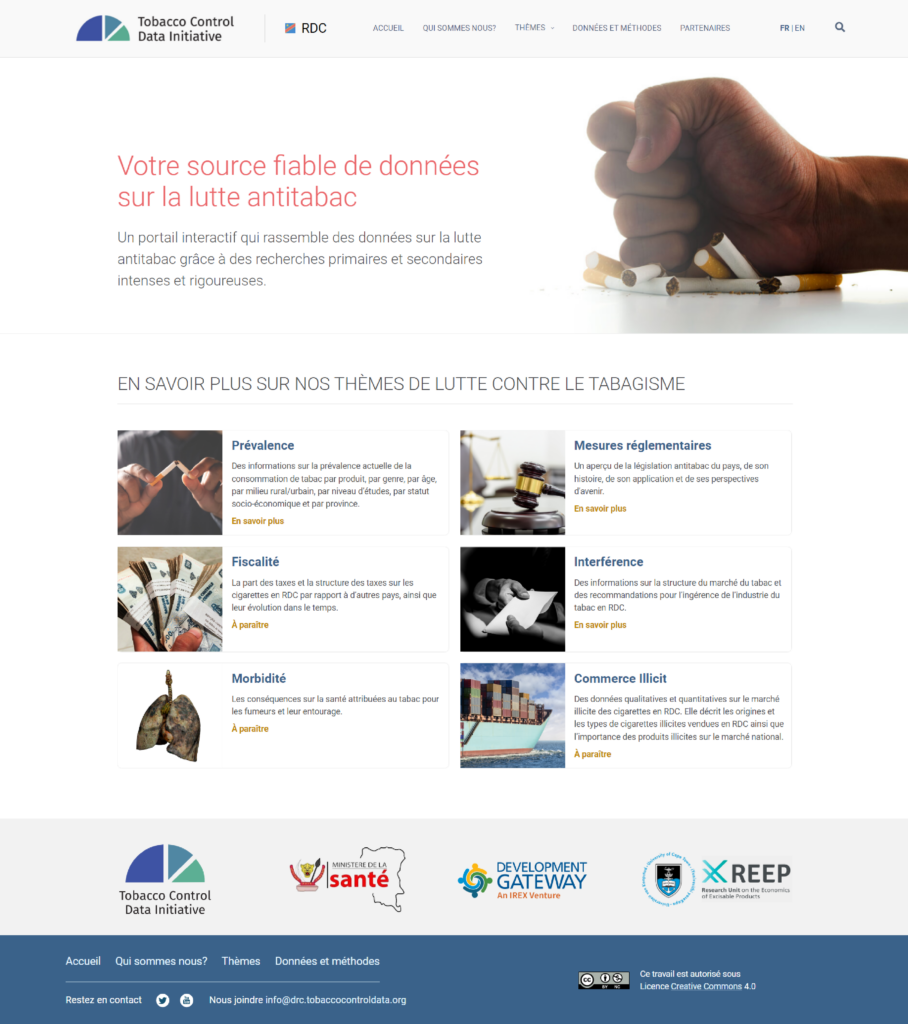
In response to the impending threat of tobacco use in DRC and the various dangers that accompany it, the Tobacco Control Data Initiative website creates a “one-stop shop” to access the relevant data that the DRC’s policymakers need to advance tobacco control legislation.
Faire progresser la lutte antitabac en République Démocratique du Congo : Site web de l’initiative de données sur la lutte antitabac (TCDI)
En partenariat avec le Ministère de la Santé de la République Démocratique du Congo (RDC), le Programme National de Lutte Contre la Toxicomanie et les Substances Toxiques (PNLCT), Development Gateway : An IREX Venture (DG) a lancé le tableau de bord de la Tobacco Control Data Initiative (TCDI) de la République Démocratique du Congo (RDC) à Kinshasa, RDC, le 29 mai 2023.
Three Lessons on Building Trust in Public Health Data
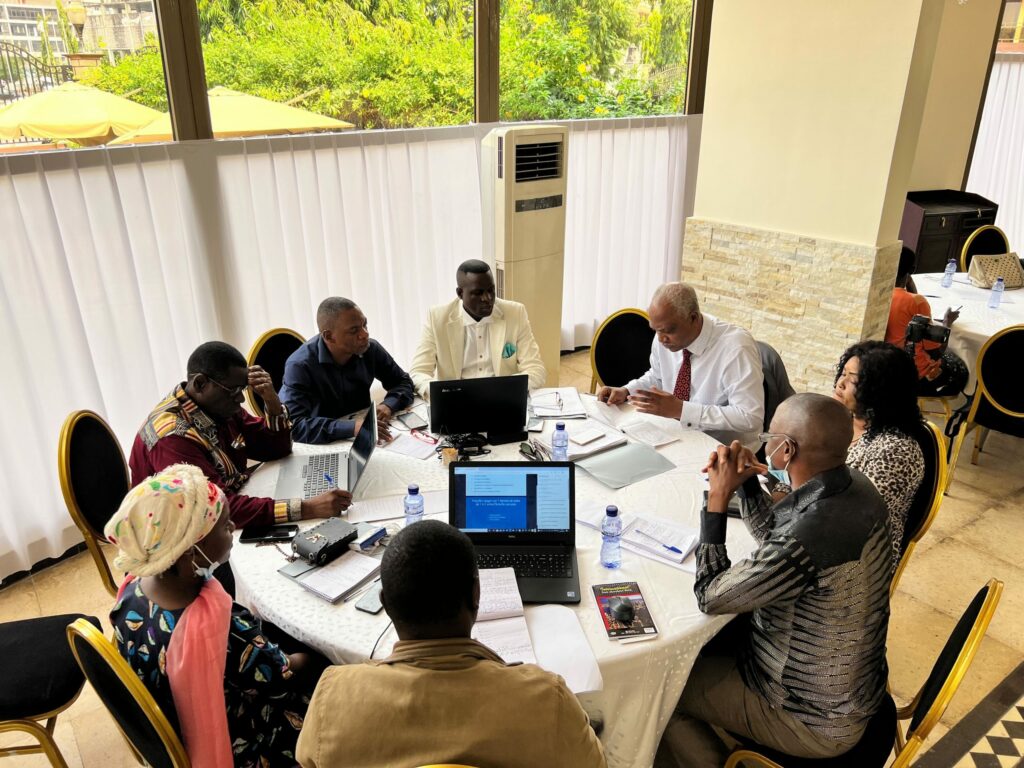
Accessible and timely public health data has the power to shape policy and significantly improve population health outcomes. But effective public health policy needs to be built on a foundation of trust in order for policies and individual health behaviors to change. In DG’s TCDI program, we’ve learned three lessons on how to build trust in public health data.
Advancing Tobacco Control in Kenya: The Tobacco Control Data Initiative (TCDI) Website

In response to the impending threat of tobacco use in Kenya and the various dangers that accompany it, the Tobacco Control Data Initiative website created a “one-stop shop” to access the relevant data that Kenya’s policymakers need to advance tobacco control legislation.
Les Fonds FODEL : Un appui aux femmes des es communautés minières avec WIM Guinée
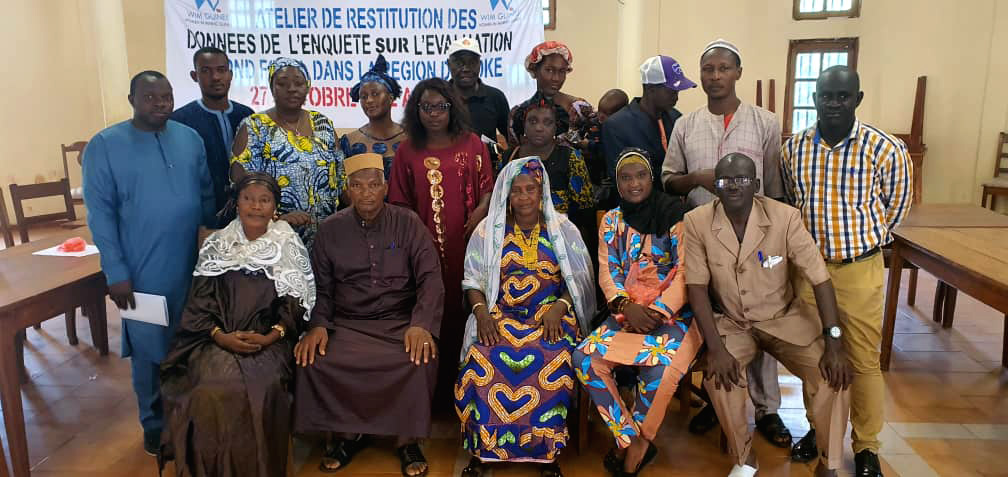
Nous avons organisé un atelier de validation avec notre partenaire de mise en œuvre, Women in Mining (WIM) Guinea dans la région de Boké le 22 octobre 2022 pour confirmer les résultats d’une collecte de données conduite par WIM Guinée dans les sous-préfectures minières de Boké et Boffa. Les données ont révélé des améliorations potentielles des fonds de développement économique local (FODEL) et de leur administration qui, si elles sont mises en œuvre, pourraient permettre davantage aux femmes et aux associations de femmes des communautés minières de capitaliser sur ces fonds et de mieux les utiliser pour soutenir leur développement local.
Farmer-Centric Data Governance Models: Protecting Farmers and Food Systems Today and Tomorrow

As farmers become more reliant on AgTech, they may find that the AgTech providers controlling these technologies (i.e., companies, nonprofits, and governments) are more integrated than ever before, resulting in a few organizations having unprecedented access to and control of farmers’ data. This dynamic results in positive and negative outcomes for farmers. Therefore, farmers face the paradox of using AgTech and adding value to their work, communities, and food systems while giving large amounts of data to AgTech companies that have, at best, limited plans for protecting farmers’ data. In this blog, we identified recommendations and next steps for AgTech providers on how to ensure that their technology benefits smallholder farmers.
How Increasing Trust Can Help to Deliver the 2030 Agenda

The Festival De Datos is here, marking a pivotal moment to assess our journey with data for development. At DG, we’ve championed leveraging data and tech for a more equitable, sustainable world. But to fulfill this vision, we need to push for a fair data future and establish a culture of trust and cooperation in data use.
Democratizing Digital or Digitizing Democracy?
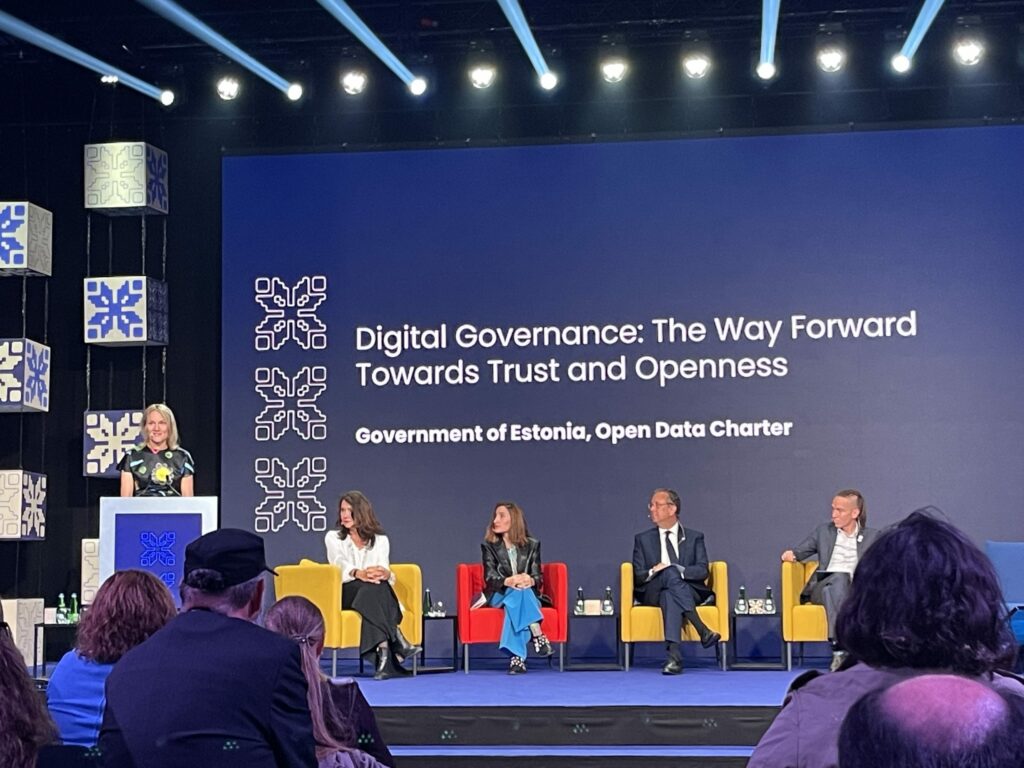
The 2023 OGP Summit in Tallinn, Estonia featured a number of discussions centered on open government in the digital age. While the use of digital tools in government is far from a new idea, the COVID-19 pandemic spurred a rapid expansion of this practice, with leaders quickly adapting to remote environments through digitizing government processes