Episode 5, Season 1 | Exploring Digital Transformation & Emerging Technology
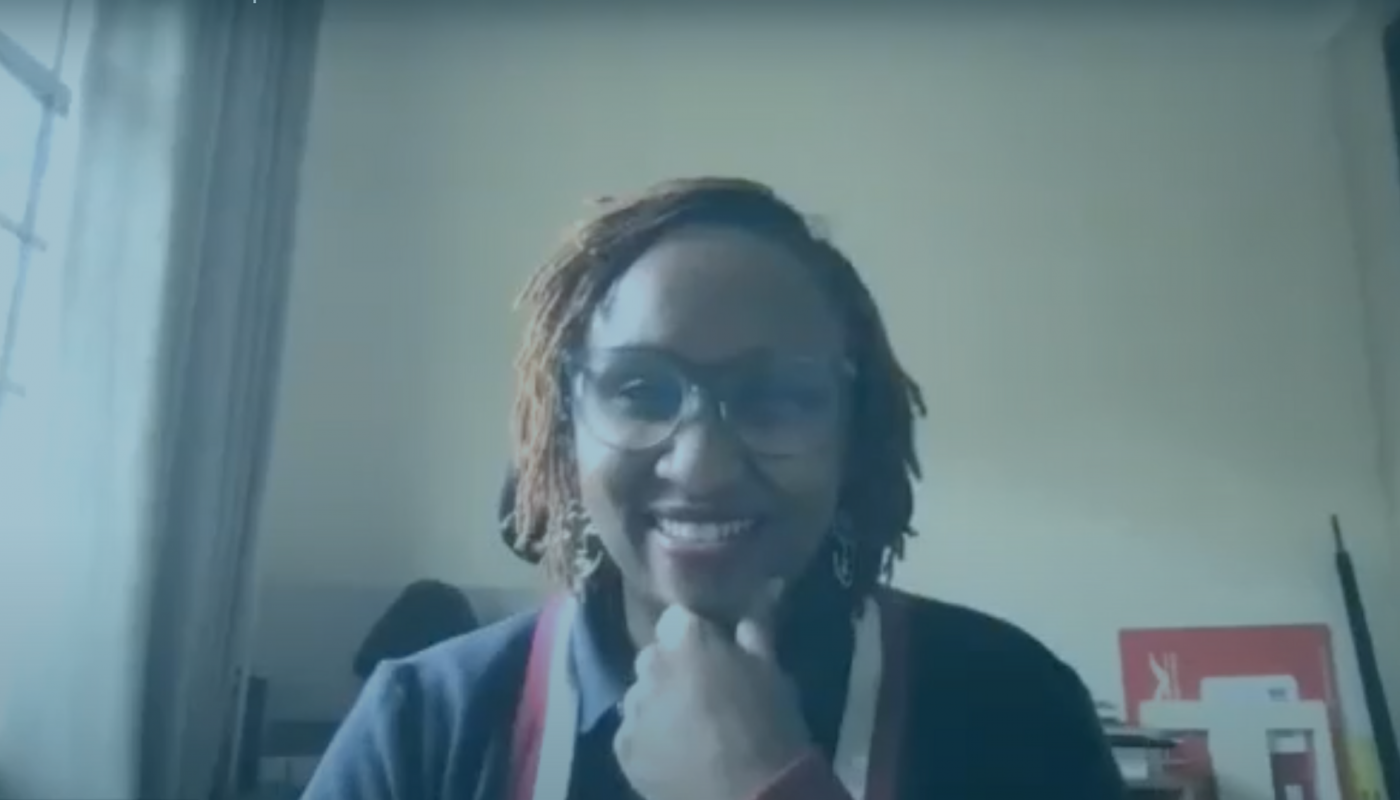
In our final episode of the current series, I speak with Annie Kilroy, Senior Associate, and Fernando Ferreyra, DG’s Director of Software Development, about digital transformation and emerging technologies. The conversation centered on what has changed in the technology landscape in the past decade, our approach to digital transformation, and how to continue prioritizing users.
You can also listen to Data… for What?! on Spotify, Stitcher, and Apple Podcasts.
Development Gateway: an IREX Venture (DG) has always been at the intersection between software and international development. In our new strategic plan, we highlight our evolving efforts to develop and deploy emerging technologies with an emphasis on sustainability, ethical innovation, and strong digital governance. Our experience co-creating with users, eye on ethical and sustainable technology, and our new drive to scale and innovate makes DG uniquely positioned to lead the digital development sector in the thoughtful implementation of new tools and approaches.
What has Changed?
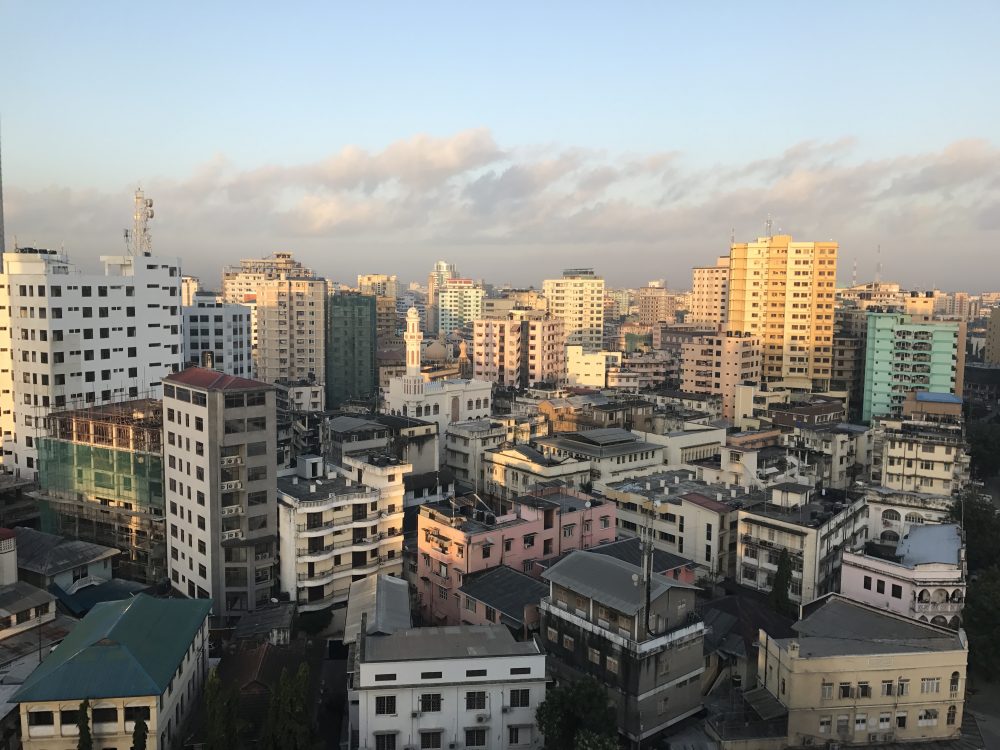
Since the start of our last strategy cycle, digital technologies have continued to expand exponentially. As smartphones become more accessible, the number of internet users continues to increase globally. With more users accessing the internet, governments are seeking to streamline their work and make more processes digital. In parallel, the COVID-19 Pandemic has accelerated the focus on digital transformation, as the need for e-government services, e-learning, and other modern methods for interacting with stakeholders has become a necessity.
We have also seen over that time that some technologies have reached maturity. Cloud computing has become the industry standard and the price is no longer prohibitive. In the past, deploying technology would require the DG team to arrive at a government ministry with servers, cables, and everything needed to maintain a system to do work that can now be achieved through the Cloud in a matter of hours. The value proposition has been tremendous in terms of efficiency, and also presents opportunities to use tools like machine learning and analytics in a new way.
Our Approach: Centering the Users
One thing that will never change is a focus on the users, and understanding the context in which a tool will be deployed. Through our Custom Assessment Landscape Methodology our first step in any project has always been an assessment of the landscape in an effort to understand who will be using a system and what decisions it will facilitate. Then, co-designing and iterating with the stakeholders throughout the development process.
At the same time, understanding the needs of the users requires a constant focus on responsibility and sustainability. Helping stakeholders select technology is not about the cutting edge, but rather what will work in a given context and be sustainable in the long term. This includes creating open source solutions, using technologies with strong documentation and support, prioritizing data protections and regular security updates, and planning for local ownership.
Where are We Going?
- New and Emerging Technology – The digital development space is constantly changing, and there is a critical need for an experienced organization like DG to help the sector understand which tools are fit for purpose, and which are pure hype.
- Bottom-Up and Top-Down Approaches – We will continue to work with organizations to marry guidance from global organizations like the UN or the WorldBank, with the bottom up approaches for what digital transformation looks like at the local level.
- Advisors and Implementers – In our new strategy, we see a role for ourselves as practitioners/implementers and also as advisors. Often, technology projects fail before they start because the funder does not understand the context, user needs, or, ultimately, the purpose. Playing an advisory role at the beginning of the technology process will allow us to influence digital development work at a greater scale and to have a clear avenue for informing the policy community.
Thank you so much for joining us on this exploration of our Strategic Plan. You can listen to all the episodes here. We will be back soon with a new season of Data… for What?! focused on data governance.
Share
Related Posts
Episode 4, Season 3 | Expanding into Climate Action: How Every Organization has a Role to Play
In episode 4, Season 3 of “Data…for What?!,” host Vanessa Goas and special guest Roshan Paul, Former Director of Leadership Practice & Climate Talent Initiative at IREX, discuss the Climate Talent Initiative, which is IREX’s first in-house climate program.
Episode 3, Season 3 | Context and Climate Action: A Conversation between the Local Development Research Institute and DG
In episode 3, Season 3 of “Data…for What?!,” DGer Charlene Migwe-Kagume and special guest Leonida (Leo) Mutuku discusses LDRI’s early warning system, an AI tool that is being used to enable farmers to plan and manage their harvest more effectively by using local and global data on weather patterns, crop yields, etc.
Episode 2, Season 3 | The Great Green Wall: How Data Can Advance One of Africa’s Most Ambitious Efforts to Combat Climate Change
In episode 2, Season 3 of “Data…for What?!,” host Vanessa Goas and special guests former DGer Joshua Mbai and Gilles Amadou Ouédraogo, Programme Management Officer for the Great Green Wall Accelerator at the United Nations Convention to Combat Desertification, discuss the Great Green Wall Initiative, the Great Green Wall Observatory, and how the the United Nations Convention to Combat Desertification and DG are committed supporting new and ongoing efforts aimed at combating climate change.
Episode 4, Season 1 | Digging Deeper in Agriculture
In Episode 4 of Data… for What?!, Development Gateway’s new podcast, Josh Powell talks to Charlene Migwe-Kagume about our past successes in the agriculture sector, how DG is prioritizing our work, and what Josh and Charlene see as the future of data & digital in the agriculture space.
You can also listen to Data… for What?! on Spotify, Stitcher, and Apple Podcasts.
DG has worked in agriculture since 2015, but it was only in our last strategy cycle that Agriculture was specifically elevated as a strategic area of focus. That decision was largely shaped by several projects, where our experience as data experts allowed us to support partners to map agricultural data ecosystems, collate and unify data sources, and support specific sector policy and service delivery objectives using data and digital tools. Additionally, we saw agriculture as an under-served sector in data and technology, as compared for example to health and education. We felt that we had a unique contribution to make in agriculture at the beginning of our 2018-2021 strategy, and based on the rapid growth and successes of our work, are continuing to scale our work in agriculture through this new strategy.
Building Trust in Data
Our work in agriculture has made clear that, with the right partnerships, our expertise in data and technology does not require us to become experts in the sector in order to add value. Our success has come from our expertise in data and digital combined with our ability to build trust between partners. For example, through Visualizing Insights on Fertilizer for African Agriculture (VIFAA) program, we worked with Africafertilizer.org and other partners to combine and then validate separate datasets from the private sector, government, and civil society. That collated data has been visualized on dashboards to provide a fuller picture of the entire sector.
We have also built trust in the cashew and seed sector supply chains through improved data governance including MoU’s and data sharing agreements. A focus on improved data governance has allowed us to reduce fragmentation and data silos, which in turn has made data beneficial for decision makers in the private sector as well as those making policy decisions.
What is the Future of Data & Digital in Agriculture?
There is tremendous opportunity for innovation in the agriculture sector, but a few that we are particularly interested in are:
- Ethical Use of Remote sensing and Machine Learning – We have seen significant advances in remote sensing and machine learning, which we have harnessed to provide cropland maps in Nigeria and Ghana for the first time since the 1970s. Innovation can drive down costs and allow for more consistent data collection, which we have seen clearly through the cropland mapping.
- Responsible Data Use – In general, we have increased our focus on responsible data use and data governance and this focus will include the agricultural sector as well. This means looking at data sharing agreements between stakeholders, but also increasingly looking at data governance models that protect smallholder farmers and include them more directly.
- Creating Partnerships and Combined Approaches – We have also seen that there are many paths to impacting smallholder farmers. Historically we have focused more on upstream policy interventions and support to the private sector that have the trickle-down effect of helping the farmer. As we move further into digital innovations, we anticipate that there will be more opportunities for DG to work directly with smallholder farmers.
We are taking a two week break from the podcast to take this conversation about our work in agriculture to in-person presentations and conversations at AGRF. If you are there, please connect with DG! Otherwise, we will be back in a few weeks for our final episode in this series where we will discuss digital transformation.
Share
Related Posts
Episode 4, Season 3 | Expanding into Climate Action: How Every Organization has a Role to Play
In episode 4, Season 3 of “Data…for What?!,” host Vanessa Goas and special guest Roshan Paul, Former Director of Leadership Practice & Climate Talent Initiative at IREX, discuss the Climate Talent Initiative, which is IREX’s first in-house climate program.
Episode 3, Season 3 | Context and Climate Action: A Conversation between the Local Development Research Institute and DG
In episode 3, Season 3 of “Data…for What?!,” DGer Charlene Migwe-Kagume and special guest Leonida (Leo) Mutuku discusses LDRI’s early warning system, an AI tool that is being used to enable farmers to plan and manage their harvest more effectively by using local and global data on weather patterns, crop yields, etc.
Episode 2, Season 3 | The Great Green Wall: How Data Can Advance One of Africa’s Most Ambitious Efforts to Combat Climate Change
In episode 2, Season 3 of “Data…for What?!,” host Vanessa Goas and special guests former DGer Joshua Mbai and Gilles Amadou Ouédraogo, Programme Management Officer for the Great Green Wall Accelerator at the United Nations Convention to Combat Desertification, discuss the Great Green Wall Initiative, the Great Green Wall Observatory, and how the the United Nations Convention to Combat Desertification and DG are committed supporting new and ongoing efforts aimed at combating climate change.
Episode 3, Season 1 | Geography: Expanding & Deepening DG’s Regional Footprint
In Episode 3 of Data… for What?!, Development Gateway’s new podcast, we continue to contextualize our new Strategic Plan. In this episode we explore how we plan to prioritize the regions in which we will work in the coming years through conversations with Vanessa Baudin Sanchez, Carmen Cañas, and Charlene Migwe-Kagume. The conversation highlights our plan to expand our portfolio in Central America and deepen our work and partnerships in West, East, and Southern Africa.
You can also listen to Data… for What?! on Spotify, Stitcher, and Apple Podcasts.
Since 2005, one of our primary points of entry into working in new countries has been DG’s Aid Management Program (AMP). The AMP program has been a way to meet partners and better understand the country and context, and new opportunities have flowed from there. However, that approach has historically been more opportunistic than strategic. We have learned a lot from working in 75 countries, but in the last strategy cycle we made an intentional effort to narrow our regional scope and focus on areas where we had existing team members and we thought we could make a deeper, sustained impact. We have found that the ability to work repeatedly with the same government partners builds trust, understanding of the context, and makes it easier to deliver results. In our new strategy we plan to deepen and expand our work in East and West Africa, but also through our partnership with IREX to start working in Central America too.
Expanding into Central America
In the past 20 years, there has been a shift in international development funding in Central America as some donors have sought to limit their funding and others have doubled down. Additionally, the region is experiencing a degradation of democracy and various factors influencing instability. At the same time we see significant opportunities to support the region. First, through our partnership with IREX, which already has a presence in the region and programs in many Central American countries. Second, the combination of Central America’s still emerging tech sector and portions of DG’s tech team that are fluent in Spanish (based in Argentina) creates an opportunity to put DG’s expertise in digital and data to use. Finally, from our previous work globally, we have learned how to invest in institutions and people in a way that survives political instability.

Building on Our Work in West & Francophone Africa
We hear from partners and funders that DG is unique for our work in West Africa, as many peer organizations have struggled to work sustainably in the region. We attribute a significant portion of our success to having a team based in West Africa that is fluent in French and local languages. Understanding the local context and being able to scale, flex, and adapt our work to each country and sector has been crucial.

Going Deeper in East & Southern Africa
In East and Southern Africa, DG has been at the forefront of digital transformation, through our AMP program, but also through our work in procurement and open contracting. We have found success through our sustainable approaches including investing heavily in subnational data use and local level capacity building. DG has always designed our tools and approaches with the end-user in mind and now the broader development community is making that shift as well.
Tying it All Together
Our global team members are both curious and eager to learn from one another. While each region has its own unique circumstances, we look for lessons that are cross-applicable. My conversation with Carmen, Vanessa, and Charlene highlighted just how universal some concepts are – for example, data governance, data usability, and sustainability. Additionally, while a team member may be based in Dakar, they often have worked in East and West Africa in addition to other regions globally. All of these experiences combined with our expertise give DG a solid foundation for building a new portfolio in Central America. We look forward to sharing our lessons learned as we expand our regional footprint in the coming years.
Share
Related
Episode 2, Season 1 | “Data…for What?!:” Expanding into Education, Media/Disinformation & Youth
In Episode 2 of "Data…for What?!," a podcast series from Development Gateway: an IREX Venture (DG) which explores our new strategic plan, Josh Powell met with experts from DG and IREX to discuss DG’s expansion into the education, media and disinformation, and youth sectors. The conversations explore the most pressing challenges and greatest opportunities for data and technology to positively impact these sectors and discuss how these trends are likely to play out in the years ahead. Based on these trends, the experts explain the unique fit for DG’s skills and specific opportunities for collaboration that align with the vision of DG’s partnership with IREX, which has a long and successful history working in each sector.
Introducing: Data… for What?!
To help contextualize the new Strategic Plan, we are launching a podcast series called Data… for What?! This series consists of 5 episodes in Josh Powell and Vanessa Goas talk to DGers throughout the organization – as well as collaborators within our strategic partner, IREX - about how and why we prioritized the various elements of the new strategy. In this first episode, we talk to Kristin Lord, President and CEO of IREX about how our partnership fits into the Strategic Plan; and to Aleks Dardelli, Executive Vice President of IREX and Chair of DG’s Board of Directors, about the process of putting the Plan together at this opportune, yet precarious, global moment.
Announcing: Development Gateway’s New Strategic Plan
Building on 20+ years of experience, Development Gateway announces its FY23-25 Strategic Plan. DG will expand its role as a global leader in both data and digital for development, working toward a digital development agenda that builds trust between institutions and the constituents they serve. This strategy lays the foundation for how we will achieve that vision.
Episode 2, Season 1 | “Data…for What?!:” Expanding into Education, Media/Disinformation & Youth
In Episode 2 of Data…for What?!, a podcast series from Development Gateway: an IREX Venture (DG) which explores our new strategic plan, Josh Powell met with experts from DG and IREX to discuss DG’s expansion into the education, media and disinformation, and youth sectors. The conversations explore the most pressing challenges and greatest opportunities for data and technology to positively impact these sectors and discuss how these trends are likely to play out in the years ahead. Based on these trends, the experts explain the unique fit for DG’s skills and specific opportunities for collaboration that align with the vision of DG’s partnership with IREX, which has a long and successful history working in each sector.
Education
Josh explored the education landscape with DG’s Aminata Camara Badji, who is the Senegal-based Regional Program Lead in West Africa, and IREX’s Becky Ward, who is a UK-based Senior Technical Advisor for education in Africa, Europe/Eurasia, Middle East, and North Africa.
Opportunity: Understanding Stakeholder Needs
One of DG’s main opportunities in expanding into education is to create strong ties with stakeholders, as DG has done in previous projects. According to Aminata, DG always prioritizes ensuring that stakeholders are meaningfully engaged “from the outset” of a project through finalization.

Next Steps: Ground-up Versus Global
Becky highlighted that the time is ripe for DG to join the education landscape, because an appetite for data-driven decision-making exists within the sector. Stakeholders generally recognize the importance of evidence-based policies that are responsive to identified needs. However, many challenges still need to be addressed in order to implement a data-informed approach to policy-making.

According to Becky, one big challenge with data in the education sector is finding ways to reconcile data collected at the global level that is often subject to rigorous methodological checks with more localized data that is subject to less rigorous methodology, but potentially more useful at the local level. “I think there really is space for advocacy for that kind of ground-up approach to collecting data,” said Becky in reference to this challenge.
Helping balance local needs with policymakers’ needs is work Aminata is also eager to do. “I’m really excited to see how we can work together, implement projects … and also make sure that all our projects will be able to be applied at the community level.” Becky agreed, noting that she is excited for the “holistic approach that is not just about developing the technology infrastructure and the protocols, but primarily about the people who use the systems.”
Media and Disinformation
Josh explored the many challenges and opportunities to combat disinformation—at the national and regional levels—during the conversation with DG’s Annie Kilroy, who is a Senior Associate based in Washington, D.C., and IREX’s Tetiana Karas, who was a Senior Program Manager based in Kyiv, Ukraine.
Opportunity: Combating Disinformation
Disinformation continues to rapidly spread in media throughout the world. In part, this is due to the lack of journalistic standards and ethics as well as legislative oversight of social media platforms—which are often subject to disinformation campaigns, according to Tetiana. Additionally, this challenge is compounded by the widespread presence of traditional media outlets promoting certain political agendas. For example, Tetiana cited a study conducted in Ukraine which showed that people were more likely to support the invasion of Ukraine if they consumed information from pro-Russian media outlets.
Annie agreed and noted that another huge issue is social media apps themselves. On social media platforms, “the algorithms and the advertisements and the suggested links … progressively get you to more and more extreme content,” said Annie.

Next Steps: Balancing Accountability, Power, and Consumer Literacy
Both the issue of how social media algorithms work and the lack of oversight show the need for accountability systems either within the platforms themselves and/or externally through governments or civil society organizations.
According to Tetiana the design of these accountability mechanisms must function independently of those who run them—and their agendas. In other words, checks must be established for systems controlling disinformation to prevent abuse of power and wrongful censure.

Both Annie and Tetiana agreed that in addition to top-down mechanisms for combatting disinformation, consumers must be better equipped to identify disinformation through improved digital and media literacy. Tetiana said that interesting next steps for DG and IREX would be to develop these sorts of “information campaigns” and “effective interventions.”
Youth
In the final conversation, Josh spoke with DG’s Principal Consultant and West Africa Regional Manager Vanessa Baudin Sanchez, who is based in Dakar, Senegal, and Nina Oduro, who was IREX’s Senior Advisor for Youth and Leadership.
Opportunity: Engaging Youth
In the youth sector, two opportunities that Vanessa and Nina identified are 1) getting youth involved in advocacy and 2) overcoming accessibility barriers that prevent youth from using digital tools.
Vanessa sees that there is often a gap between young people knowing about global and local issues and taking positive action in response to these issues. “Everything digital and technology can be used to be able to fill in that gap and tell [youth]…’Well, we can help, and we can help you set some goals and achieve some of those goals.’” said Vanessa.
According to Nina, any organization with a mission to support youth needs to have frameworks and support systems in place to ensure that youth have access to the digital technology they need. She noted that much can still be done without a digital device. Youth, according to Nina, “may receive information from someone that got information from a digital device,” which can allow young people to leverage information to improve their lives even if they do not have the digital device offering this information.

Vanessa had similar concerns regarding accessibility. She often wonders what happens to technology and digital tools given to young people after a development initiative is finished. “When we give equipment to those young people and we’re trying to have them use technology and data to improve—whether it’s lifestyle or with their condition and whatever—I think the capacity building component should also include a capacity component on digital innovation,” said Vanessa, who also noted that trainings on data privacy and security need to be offered to protect the young people using these tools.

Next Steps: Empower Youth Today
The DG/IREX partnership will allow both organizations to work closely with and empower youth in more meaningful ways.
Vanessa says she is excited for close collaborative work with IREX in the youth sector. Specifically, Vanessa is eager to do work with IREX that shows young people that “they can indeed make a difference and that we can help.”
Share
Recent Posts
Supporting Ethiopia’s National Soil Fertility and Health Action Plan
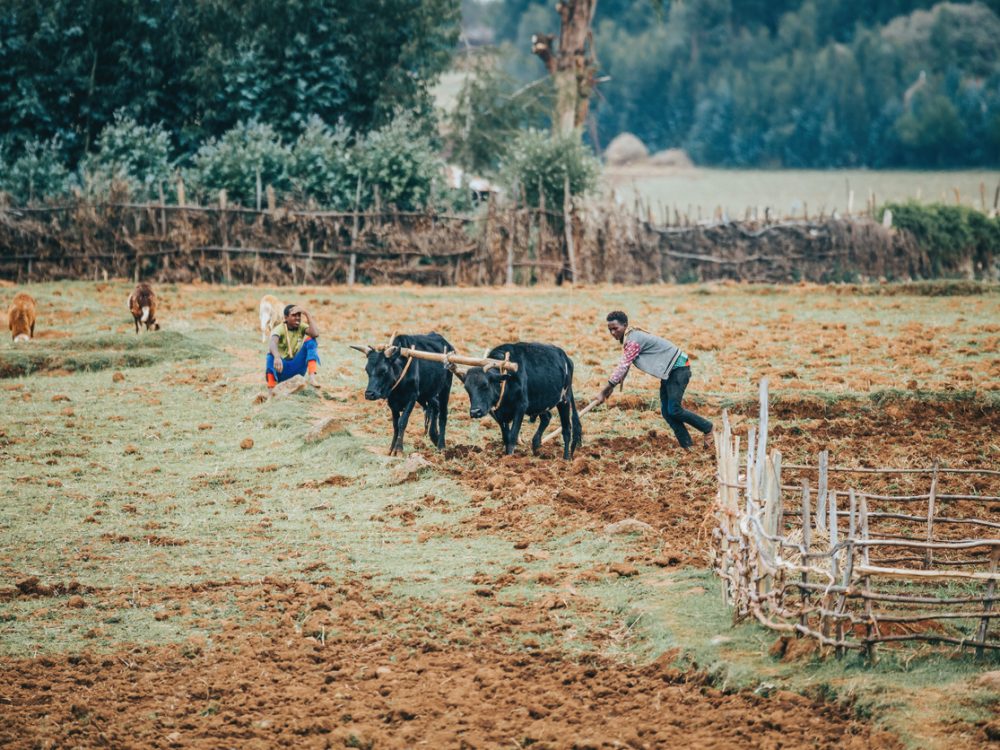
Declining soil fertility remains a major constraint on Ethiopia’s agricultural productivity. This blog reflects on the launch of the National Soil Fertility and Health Roadmap and DG’s support in its development, highlighting lessons on government-led reform and long-term resilience.
Development Gateway Collaborates with 50×2030 Initiative on Data Use in Agriculture
Development Gateway announces the launch of the Data Interoperability and Governance program to collaborate with the 50x2030 initiative on data use in agriculture in Senegal for evidence-based policymaking.

Strengthening Online Safety Through Prevention in the Philippines
Tech-Facilitated Gender-Based Violence continues to evolve alongside emerging technologies. This blog explores how preventative measures, such as the Safety By Design approach, can be used to create a safer internet.
Introducing: Data… for What?!
In July, Development Gateway: an IREX Venture (DG) launched our new Strategic Plan for Fiscal Year 2023 to 2025. This plan builds on twenty-two years of project implementation experience and policy engagement around the globe. To help contextualize the new Strategic Plan, we are launching a podcast series called Data… for What?! This series consists of 5 episodes in which Vanessa Goas, DG’s COO, and I (Josh Powell, CEO) talk to DGers throughout the organization – as well as collaborators within our strategic partner, IREX – about how and why we prioritized the various elements of the new strategy.
In the first episode, we talk to Kristin Lord, President and CEO of IREX, about how our partnership fits into the Strategic Plan; and to Aleks Dardeli, Executive Vice President of IREX and Chair of DG’s Board of Directors, about the process of putting the Plan together at this opportune, yet precarious, global moment.
Where Are We Going?
Widening DG’s Focus
To understand the new Strategic Plan, we need to discuss the previous Strategic Plan. DG has historically been a technology generalist, but in the last strategy we made a really intentional decision to focus on specific sectors (health, agriculture, and public financial management) and to concentrate specifically in West and East Africa. In addition to our work as implementers, we added a work stream of data strategy and policy. By narrowing our focus in the last plan, we were able to better understand our core value proposition and programmatic offerings. We found that as we worked in fewer regions, more intentionally and deeply, we were able to deliver better change. Now, with our new Strategic Plan, we are uniquely situated to thoughtfully build upon that consolidated base and to scale our impact.
The Current Global Moment
Throughout the conversation, Vanessa, Aleks, and Kristin highlighted the importance of the current moment in global affairs. Between the largest youth population in human history, recent democratic backsliding, societal changes from the COVID-19 pandemic, and more, now is a crucial moment to reassess how we can best use data and digital to solve problems.

A Growth Agenda
In 2020, I wrote that “A global pandemic may not be the ideal business environment to pursue a growth agenda, but we believe that now is the time for DG to be bolder, and that this boldness will require that we also be bigger.” We are explicit in the new strategic plan that we intend to double the size of DG in the next three years. We see that the world and technology are rapidly changing and if we do not match the scale of these challenges and opportunities, and make aggressive strides, we risk not having the impact DG is capable of. This is where the partnership with IREX is important. By growing our work together, we know that we can leverage our strengths for even deeper change.
DG has spent the last few years positioning ourselves for this growth. We have prioritized systems and processes that will allow us to grow while preserving our culture of innovation and learning, the quality of our work, and while remaining a good partner. In many ways, this is not the beginning of a growth agenda, but rather the midway point. We are now in a position to accelerate this growth in a responsible and impactful way.
This growth agenda also means growing our global team. Over the past five years, DG has gone from 50% based in the United States to less than 25% of our team being based in the US. Our team is now based in more than a dozen countries around the world, and we plan to continue that trend in this growth cycle.

The Process
We had intended to release this Strategic Plan over a year ago, but early in the strategy process our conversations with IREX started, and so we put the Strategic Plan on hold. Last October we finalized the partnership and established a new board, which allowed us to restart the strategy process. From a nuts-and-bolts perspective, we worked closely with the board, but we also wanted it to be a broadly inclusive process as well. In the early stages of development we had one-on-one conversations with DGers to understand what the team was seeing in their programming, what they were excited about, what was working and what was not, and where they saw opportunities. In March, we held an all hands meeting to present a general outline, talk about the process, and allow the team to ask questions. In April, the full DG team had the opportunity to read the strategy and make any additional comments. Throughout the process we had many touchpoints for comments from both the Board and from DGers, which was important for shaping the Strategic Plan.
The Partnership
IREX is a crucial part of this strategy cycle, and specifically in our growth trajectory. We have had much interest from other nonprofit leaders in how the partnership came together. This came out in my conversation with Kristin as well. Both Kristin and I agree that the most important part is figuring out what you want to do together and why. From there, it is much easier to select a method of partnership. Kristin also emphasized that there is a spectrum to how a partnership of this kind could look – from full merger to a more dedicated plan of working together.
I hope you will enjoy this podcast series as much as I enjoyed my conversations. Stay tuned next week, when we talk in more detail about expanding our work in education, media and disinformation, and youth!
Share
Recent Posts
Supporting Ethiopia’s National Soil Fertility and Health Action Plan
Declining soil fertility remains a major constraint on Ethiopia’s agricultural productivity. This blog reflects on the launch of the National Soil Fertility and Health Roadmap and DG’s support in its development, highlighting lessons on government-led reform and long-term resilience.
Development Gateway Collaborates with 50×2030 Initiative on Data Use in Agriculture
Development Gateway announces the launch of the Data Interoperability and Governance program to collaborate with the 50x2030 initiative on data use in agriculture in Senegal for evidence-based policymaking.
Strengthening Online Safety Through Prevention in the Philippines
Tech-Facilitated Gender-Based Violence continues to evolve alongside emerging technologies. This blog explores how preventative measures, such as the Safety By Design approach, can be used to create a safer internet.